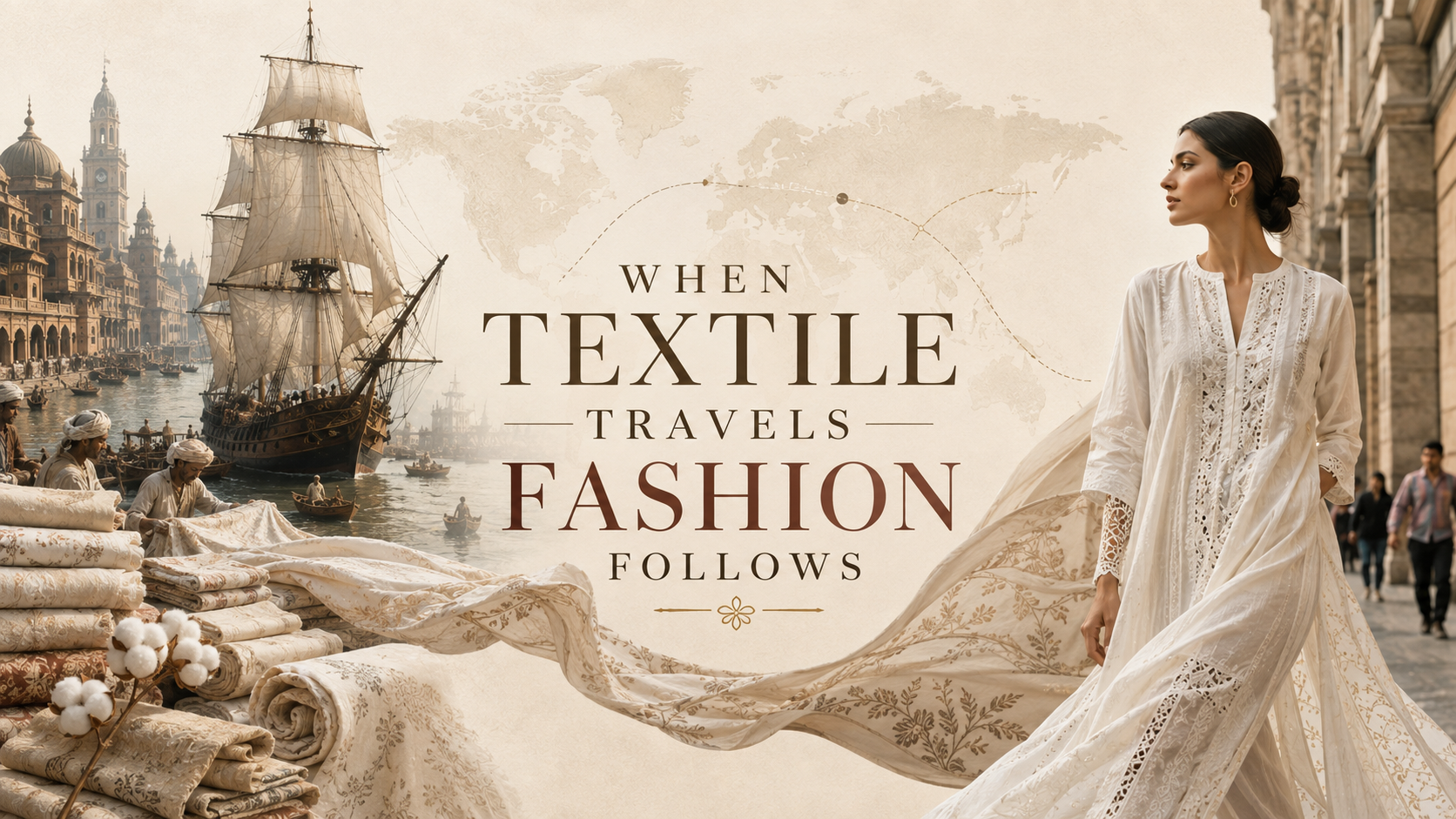
How trade carried fabrics, craftsmanship, and timeless design across cultures.
Fashion is often described as a reflection of culture, but it is equally a reflection of movement.
Long before social media, fashion magazines, or international fashion weeks, ideas travelled across continents through merchants, explorers, and trade routes. Fabrics crossed oceans, artisans shared techniques, and garments evolved as different cultures encountered one another. Every textile carried more than thread. It carried stories, craftsmanship, and inspiration.
Today, when we admire a beautifully embroidered dress, it’s easy to see only the finished garment. What we often overlook is the centuries of exchange that shaped the way it looks.
Fashion Has Always Travelled
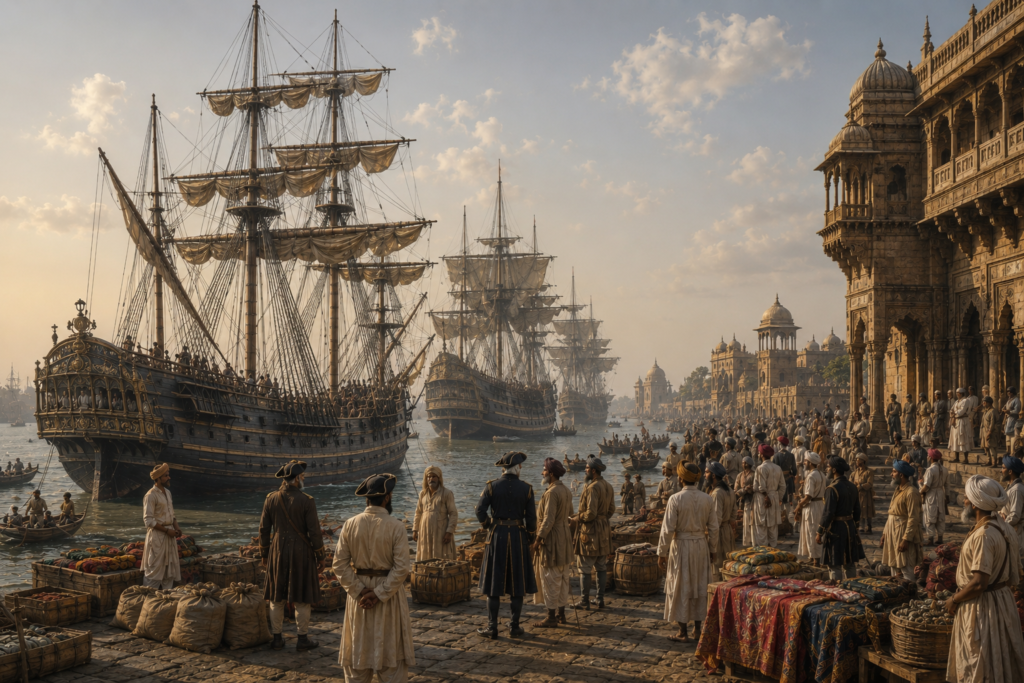
The history of fashion is deeply connected to the history of trade. Silk travelled from China to Europe through the Silk Road. Indian cotton and muslin became highly sought after across Europe for their softness and breathability. Fine textiles were never simply traded as commodities. They influenced the way people dressed, the fabrics designers preferred, and even the silhouettes that became fashionable.
Trade did more than move products. It moved ideas, sometimes unchanged, and sometimes blended with local traditions to create something entirely new.
A Fascinating Similarity
While researching historical embroidery traditions, one comparison immediately caught my attention: Victorian Whitework embroidery and Lucknow’s Chikankari.
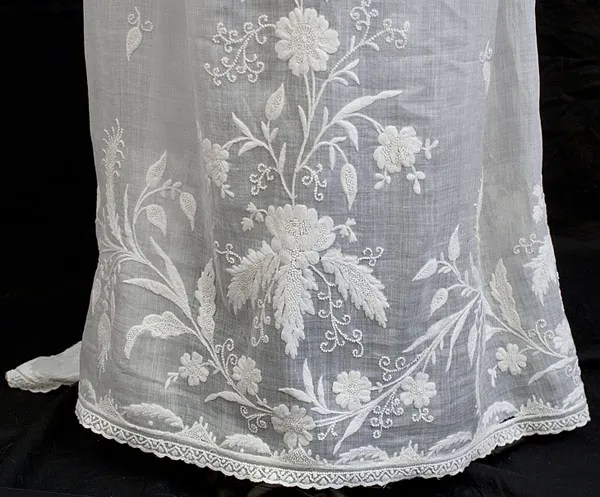
At first glance, they belong to different worlds. Victorian Whitework became popular in nineteenth century Europe, while Chikankari has its roots in India and flourished during the Mughal period. Yet visually, the two traditions share some remarkably similar characteristics: white thread embroidered on white fabric, delicate floral motifs inspired by nature, flowing botanical patterns, and lightweight fabrics such as cotton and muslin. In both, texture takes precedence over colour, favouring soft elegance over bold decoration.
One particularly interesting parallel is the use of subtle, shadow-like effects. In Chikankari, stitches such as Bakhiya, often called shadow work, create delicate depth by working from the reverse side of the fabric. Victorian Whitework relied on a similar principle, leaning on texture and tonal contrast rather than colour, so that garments felt refined through craftsmanship rather than ornamentation.
These similarities don’t necessarily mean one tradition directly influenced the other. Each developed within its own cultural and historical context. But placing them side by side reveals something worth noticing: how different cultures, working independently, can arrive at strikingly similar expressions of beauty.

When Trade Moves More Than Fabric
History shows us that textiles travelled extensively across continents. European demand for Indian cotton and muslin grew significantly because these fabrics offered a lightness and comfort that was difficult to replicate elsewhere at the time. As fabrics moved through international trade, they introduced designers, merchants, and consumers to new materials and new possibilities.
Trade doesn’t simply transport products. It introduces people to unfamiliar craftsmanship, changes preferences, and encourages experimentation. Over time, these exchanges shape fashion itself.
Whether every shared design detail can be traced to direct influence is a question historians continue to explore. What’s undeniable is that global textile trade created space for cultures to observe, appreciate, and reinterpret one another’s craftsmanship.
Why These Similarities Still Feel Relevant
Perhaps this is why Chikankari continues to feel so natural on contemporary Western silhouettes.
As a designer, I’m often drawn to details like pintucks, smocking, soft gathers, ruffles, and occasionally pearl embellishments when creating garments with Chikankari. Interestingly, many of these same elements were widely appreciated during the Victorian era. It makes me wonder whether certain design languages simply transcend geography and time. Delicate embroidery, airy cotton fabrics, soft feminine silhouettes, elegant texture: these qualities continue to resonate because they create a feeling of timeless sophistication, regardless of where they originated.
Looking Beyond Fashion
The next time you see an embroidered white dress, it may be worth asking a different question. Instead of wondering where it was made, consider how many journeys, cultures, and generations of craftsmanship helped shape its aesthetic.
Fashion is rarely confined by borders. Textiles travel. Ideas travel. Craftsmanship travels.
And sometimes, centuries later, those journeys quietly reveal themselves in the remarkable similarities between traditions that once seemed worlds apart.
Leave a Reply